Saturday, May 4, 2013

firehiwetFirehiwot Guluma Tezera
DEVELOPMENT AND INVESTMENT AS A REASON FOR LAND GRABBING
IN OROMIA FROM THE FARMERS.
Potentially, Oromia is one of the richest countries in Africa. Agriculture is the means of livelihood for
more than 90% of the population. Because of favourable climate and rich soil, many types of crops
are cultivated and normally there is little need for irrigation. Oromo farmers have contributed to
world agriculture by cultivating and developing some of the world's crop plants. The main cash crops
are coffee and chat (a stimulant shrub). Coffee, a major cash earner for many countries, has its origin
in the forests of Oromia and neighbouring areas. It has remained the chief export item, representing
more than 60% of the foreign earnings of successive Ethiopian colonial regimes.
So, because of the fertile lands and resources it has, Oromia is particularly targeted by Wayne
regime to grab the land. . Ethiopian government continues forcefully evicting Oromo farmers and
other indigenous peoples from their ancestral lands and leasing them to national and transnational
investors without their consent and with no compensation. Hundreds of thousands of Oromo
farmers and other indigenous communities continue losing their farming and grazing lands they have
owned for centuries and thrown out on the streets exposing their families and extended families to
humiliation, starvation and death. In many instances family heads are given a 30 day notice to
evacuate from their land. Those who refused to comply with the short notice faced intimidation,
beatings, arrests, and in some cases death.

The current destructive land-grab policy of the regime is a continuation of the amassing of personal
wealth of the members of the ruling elite at the cost of destroying the livelihood of the families of
indigenous Oromo. It has nothing to do with investment or development as the government tries to
mislead the international community. Since 1996, the total area of agricultural land transferred to
the investors is 4 million hectares. 72000ha farm land is grabbed by foreign investor of bio-fuel crop
in 2008 to establish castor crop as out grower schemes on land used by 84000 to124000
smallholders in 240 peasant associations (PAs) in East and West Haraghe provinces. A total land
transferred to investors will be 7 million hectares of agricultural land by the end of 2015. It is
estimated all together that millions of acres of cultivable land have already been leased to foreign
investors. The tendency is to double or triple in the five Transformation plans, as the TPLF regime
recently started publicly to defend its land grab policy as economic imperative.

The weyane regime considers the Oromo land a personal toy of the authorities. Investments are
expanding at the expense of the lives of millions of households evicted from their land, their only
source of livelihood. Millions of hectares of land have been distributed to the so called investors, the
majority of whom are from the ruling tribe of Tigray, evicting the local people in Oromia. The
families of those evicted households are pulverized into daunting poverty subsequently. This is the
tragic history behind the proliferating large scale commercial estate farms, sugar factories,

Oromia: Mass Media Under Arrest – World Press Freedom Day

Gadaa.com
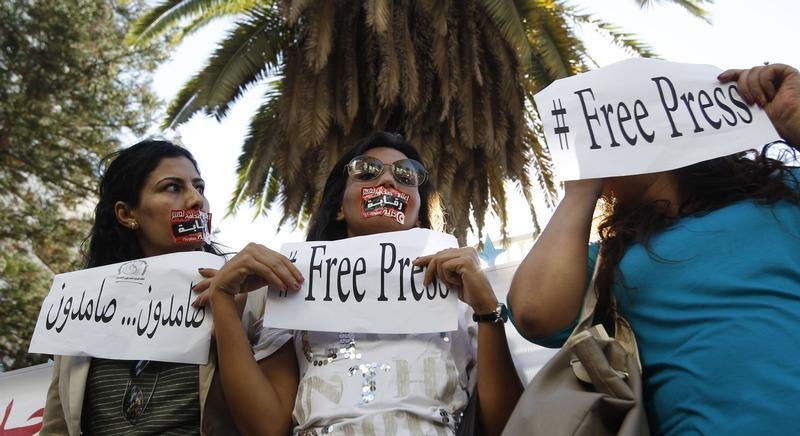
As the world marks the UNESCO-adopted World Press Freedom Day today, May 3, 2013, activists of press freedom in the Horn of Africa highlight how the increasingly oppressive and draconian press laws in Ethiopia have led not only to the imprisonments and exiling of scores of Oromo journalists, but also to the wiping out of the Afan Oromo mass media serving the Oromo people in the Horn of African region.
The Oromo people make up the largest nation in the Horn of Africa, and their language, Afan Oromo, is the third largest language with most speakers in Africa. Despite this, there is no independent Afan Oromo media outlet operating in Oromia, the homeland of the Oromo, due to the hostile policies of the Ethiopian government towards Afan Oromo mass media, in addition to the already repressive media laws that have made independent journalism a risky career choice.
Journalists – Extinct in Oromia
Over the last two decades, countless Oromo journalists have been harassed, imprisoned and/or exiled by the TPLF-led Ethiopian regime, and even those Oromo journalists in the state-owned media outlets have not been spared from these human rights violations. To name a few of the imprisoned and/or exiled journalists: Lelisa Wodajo, Dhabesa Wakjira and Shiferraw Insermu of the state-owned ETV; Eyob Bayisa and Israel Seboka of Seife-Nebelbal newspaper; Tesfaye Deressa, Solomon Nemera and Garoma Bekele of Urjii newspaper; and Nuhamin Bikila of ETV, and later VOA.
Mass Media – Extinct in Oromia
Jamming of SBO by the TPLF Regime
The last surviving Afan Oromo independent newspapers,Jimma Times/Yeroo and Urjii, have been closed down for more than five years, with no sign of another publication replacing them. And, the Afan Oromo shortwave radios, such as VOA and SBO – which are broadcast to Oromia from outside, are under constant threat of jamming by the Ethiopian regime. What’s more, Diaspora-based Oromo news and opinion websites are blocked in Oromia, and Internet surfing is highly monitored as a recent report by Citizen Lab revealed.
In short, it’s not just journalists in prison or in exile, the mass media are under arrest in Oromia. It needs intervention from all sectors of the Oromo society to end this era of darkness in Oromia.

Gadaa.com

Free Jailed Journalists, Allow Media Freedom
MAY 3, 2013
Ethiopia’s journalists shouldn’t be spending World Press Freedom Day in jail on trumped-up terrorism charges. Freeing these journalists would be an important step toward improving Ethiopia’s deteriorating record on press freedom.
 
Leslie Lefkow, deputy Africa director.
(Nairobi) – The Ethiopian government should mark World Press Freedom Day, on May 3, 2013, by immediately releasing all journalists jailed under the country’s deeply flawed anti-terrorism law. On May 2, 2013, the Supreme Court upheld an 18-year sentence under the anti-terrorism law for Eskinder Nega Fenta, a journalist and blogger who received the 2012 PEN Freedom to Write Award.

Eleven journalists have been convicted and sentenced since 2011 under Ethiopia’s repressive anti-terrorism law, including six in absentia. Three of the eleven are currently in prison. Two other journalists are currently on trial under the anti-terrorism law. Another journalist, Temesgen Desalegn, the editor of the now defunct independent magazine Feteh, is on trial for three offenses under the criminal code.

“Ethiopia’s journalists shouldn’t be spending World Press Freedom Day in jail on trumped-up terrorism charges,” said Leslie Lefkow, deputy Africa director at Human Rights Watch. “Freeing these journalists would be an important step toward improving Ethiopia’s deteriorating record on press freedom.”

Since Ethiopia’s anti-terrorism law was adopted in 2009, the independent media have been decimated by politically motivated prosecutions under the law. The government has systematically thwarted attempts by journalists to establish new publications. Blogs and Internet pages critical of the government are regularly blocked, and in 2012 printing houses came under threat for printing publications that criticized the authorities. Mastewal Birhanu, the manager of Mastewal Publishing, for example, was charged under the criminal code for printing the editions of Feteh that were the basis for the charges against Temesgen.

Human Rights Watch has repeatedly raised concerns about the anti-terrorism law’s overly broad definition of “terrorist acts.” The law’s provisions on support for terrorism contain a vague prohibition on “moral support” under which only journalists have been convicted.

One of the three journalists sentenced under the law who remain in prison is Eskinder Nega Fenta, a veteran Ethiopian journalist. He had been detained numerous times, and was sentenced in July 2012 to 18 years in prison for conspiracy to commit terrorist acts, as well as participation in a terrorist organization. Eskinder’s sentence was upheld on appeal on May 2, 2013. The United Nations Working Group on Arbitrary Detention, a panel of independent experts, concluded in November that Eskinder’s imprisonment was arbitrary and “a result of his peaceful exercise of the right to freedom of expression.”

Woubshet Taye Abebe, who is serving a 14-year sentence under the anti-terrorism law, was a winner of the 2012 Hellman-Hammett Award, administered by Human Rights Watch. Woubshet was the deputy editor of the Awramba Times prior to his arrest in 2011.He alleged in court that he was tortured in pretrial detention, as have other defendants detained on terrorism charges. The court did not investigate his complaint.

Reeyot Alemu Gobebo, a journalist for Feteh, was convicted on three counts under the terrorism law for her writings. Her sentence was reduced from 14 years to 5 years on appeal, and she remains in prison. Reeyot was recently awarded the prestigious 2013 UNESCO/Guillermo Cano World Press Freedom Prize. She will miss the May 3 award ceremony in Costa Rica.

Members of the international media have also been charged under the anti-terrorism law. In December 2009, two Swedish journalists, Martin Schibbye and Johan Persson, were convicted for “rendering support to terrorism” and entering the country illegally “to commit an act that is a threat to the well-being of the people of Ethiopia.” They had entered the country without a visa and were arrested while investigating the situation in Ethiopia’s eastern Somali region, site of a longstanding insurgency. They were pardoned and released in September 2012 after more than a year in prison.

“The journalists who have been detained and convicted have one thing in common – they were all exercising their right to freedom of expression, a right guaranteed by the Ethiopian constitution and international law,” Lefkow said.

In 2012 Hailemariam Desalegn became Ethiopia’s prime minister following the death of Meles Zenawi, under whose leadership the country experienced a sharp decline in civil and political rights – including freedom of expression. Hopes that Hailemariam’s government would improve Ethiopia’s record on free expression have been dashed by ongoingarbitrary arrests and detentions of journalists and others.

Since January 2012, members of Ethiopia’s Muslim community have held regular protests in the capital, Addis Ababa, and other towns over alleged government interference in religious affairs. The government has harassed and detained journalists who have reported on these protests. Yusuf Getachew, former editor of the now-defunct Islamic magazine Yemuslimoch Guday, was charged under the anti-terrorism law and is on trial, though the trial is closed to the public. Solomon Kebede,Getachew’s successor at the magazine, was arrested on January 17 and has also been charged under the anti-terrorism law. Prior to charges being bought, Solomon spent more than two months in pre-trial detention at Maekelawi prison in Addis Ababa, which is notorious for torture, without access to legal counsel.

The right to freedom of expression is guaranteed in the Ethiopian constitution, and in numerous African and international conventions, including the African Charter on Human and Peoples’ Rights, which Ethiopia has ratified. In November, Ethiopia was appointed to the United Nations Human Rights Council and as such has made a commitment to uphold “the highest standards of human rights as enshrined in the constitution of the country and in the international and regional human rights treaties that Ethiopia has ratified” – including rights to freedom of expression.

“As a recently appointed member of the UN’s Human Rights Council, Ethiopia should take swift steps to improve the media environment in the country,” Lefkow said. “These include immediately releasing all journalists imprisoned under the anti-terrorism law, amending the law’s worst provisions, and ending the harassment of what little independent media remains in the country.”
http://www.hrw.org/